
XWA Power & Cable
Copper clad steel for grounding and conductor applications
Copper clad steel combines a copper outer layer with a steel core, bringing electrical performance and mechanical strength into one composite conductor.
Copper covered steel wire is another term used for this composite conductor. The outer copper layer surrounds a steel core, with the finished wire specified by its conductivity, copper coverage and mechanical condition.
Single wire supports specified conductor and processing applications. Stranded forms, often described as CCS cable or copper clad steel cable, are used in engineered grounding and earthing networks.
For XWA, a useful CCS solution starts with the application: the electrical duty, the conductor construction and the way it will be connected and delivered.
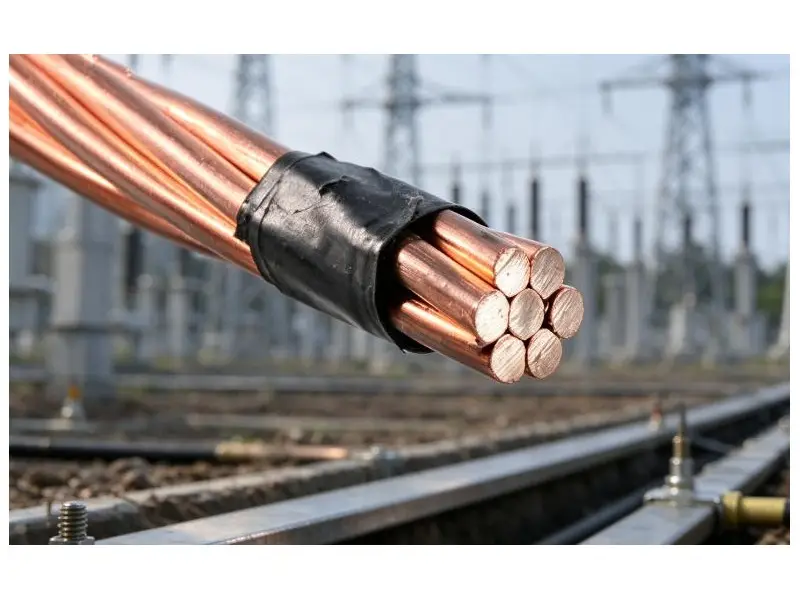
Wire & stranded conductors
CCS Wire, Tinned Wire and Stranded Conductors
Wire condition and strand construction shape the electrical, mechanical and processing performance of the finished product.

Copper Clad Steel Conductors and Ground Wire
Each component wire has its own copper layer and steel core. The wires are laid together to form a continuous copper clad steel conductor. In specified substation, industrial and infrastructure grounding arrangements, this copper clad steel ground wire connects the grounding network through joints matched to its diameter, strand arrangement and electrical duty.
Copper clad steel wire
Bare single wire is used where the specified material condition suits forming, stranding or incorporation into another conductor design. Hard-drawn and annealed wire have different mechanical requirements.
Tinned CCS wire
A tin coating over the copper adds surface and solderability requirements for electronic leads and suitable soldered connections.
Composite construction
Copper Layer and Steel Core Construction
The copper layer
The copper provides the outer conductive surface. Its coverage, thickness and bond to the steel are defined alongside the required conductivity and resistance.
The steel core
The core contributes mechanical strength. Wire condition, tensile properties and elongation are selected for the intended service and handling requirements.
% IACS describes conductivity. A 40% IACS grade expresses conductivity relative to the annealed-copper reference. Copper-layer thickness and copper content are separate properties.
Grounding performance
Finished resistance, fault-current duty and compatible joints connect the conductor with the earthing-system design.
Processing behaviour
Material condition and bond integrity matter when wire is formed or processed further.
High-frequency designs
Some coaxial designs use CCS centre conductors. Skin effect makes copper-layer thickness relevant to the specified frequency range and complete cable design.
Technical details
Dimensions, Conductivity and Mechanical Properties
The product specification brings electrical performance, geometry, copper coverage and mechanical properties together.
| Characteristic | Product specification | Practical value |
|---|---|---|
| Wire / strand size | Wire diameter and tolerance; for strands, wire count, individual diameter and finished diameter. | Relates the conductor geometry to route handling and connector fit. |
| Conductivity | Specified % IACS grade and material condition. | Defines the electrical grade of the composite wire. |
| DC resistance | Maximum resistance at a stated temperature, with length units such as ohm/km. | Connects the delivered wire or strand with the electrical design. |
| Copper layer | Nominal, average or minimum thickness with its measurement basis. | Defines copper coverage and the acceptance requirement. |
| Strength | Wire tensile strength in MPa; finished breaking load in N or kN where required. | Distinguishes component-wire strength from complete-conductor performance. |
| Elongation & bond | Material condition, deformation and copper-to-steel bond requirements. | Matches the product to handling, forming and subsequent processing. |
Dimensions, grades and acceptance values are agreed for the quoted construction. For grounding conductors, we give particular attention to finished resistance and the joint arrangement; for processing wire, the material condition and copper bond deserve equal weight.
English product introduction · 5 pages · 359 KB
Standards & quality
Product Standards and Inspection Requirements
| Reference | Product scope |
|---|---|
| ASTM B227 | Hard-drawn copper clad steel wire. |
| ASTM B910/B910M | Annealed copper clad steel wire. |
| ASTM B228 | Concentric-lay-stranded copper clad steel conductors. |
| ASTM B452 | CCS wire for electronic applications. |
| ASTM B520 | Tin-coated CCS wire for electronic applications. |
Inspection requirements can cover copper coverage, bond integrity, electrical resistance, mechanical properties and, for tinned wire, coating and solderability.
For specified lightning-protection conductors and earth electrodes, the IEC component-standard scope explains IEC 62561-2. Grounding and bonding equipment may also have market-specific requirements, including UL 467 where applicable. Required product certification is checked against its exact coverage.
Material comparison
Copper Clad Steel vs Copper vs Copper Clad Aluminium
| Material | Construction | Application distinction |
|---|---|---|
| Copper clad steel (CCS) | Copper outer layer over a steel core. | A combination of a copper surface and steel-core strength, with specified composite electrical properties. |
| Copper | Copper conductor without a steel core. | A different resistance and thermal-performance basis; an equivalent design follows the required project duty. |
| Copper clad aluminium (CCA) | Copper outer layer over an aluminium core. | An aluminium-core composite with different mechanical and electrical characteristics from CCS. |
Our preference is to compare conductors at the required electrical and mechanical duty. That gives a more useful project comparison than colour, nominal area or price per metre alone.
Project supply
CCS Project Supply and Export Packing
XWA Power & Cable is an export-focused cable manufacturer serving international power and industrial projects.
Packing for the delivered length
CCS wire and conductors may be packed in coils, spools or on drums according to product condition and handling needs. Continuous lengths, package weights and pay-off requirements shape the packing arrangement.
Length identification and batch information help relate each package to the installation or processing schedule. The copper surface needs protection during handling and transport.
Power cables and grounding materials
A project can include both feeder cables and a separate grounding-material schedule. The conductor construction and performance requirements are defined for each item.
Explore our medium-voltage power cables, high-voltage cable systems and XWA factory information for the wider cable business.
Copper Clad Steel Wire Prices and Project Quotations
Copper clad steel wire prices depend on the finished diameter, copper-layer requirement, conductivity grade, steel condition and order quantity. Stranded conductors add wire count, lay and finished-conductor requirements; tinned wire adds coating and solderability requirements.
Coil or drum lengths, package weights and freight terms also affect the quoted supply. A price per kilogram and a price per metre use different bases, so the specified product and quoted unit belong together. XWA prepares project quotations around the required construction, quantity and destination.
Product questions
CCS Wire and Grounding Conductor FAQs
What does CCS cable mean?
CCS means copper clad steel. It describes the composite conductor material, which can be supplied as single wire or assembled into a stranded conductor. Bare grounding conductors and insulated cable constructions are different finished products.
Is 40% IACS the same as 40% copper?
No. % IACS is a conductivity designation relative to the annealed-copper reference. Copper-layer thickness and copper content are separate properties.
Is copper clad steel wire suitable for grounding?
Specified CCS wires and strands can be used in engineered grounding arrangements. Resistance, fault duty, mechanical requirements, environment and connection compatibility determine the selected construction.
How does bare CCS wire differ from tinned CCS wire?
Tinned CCS adds an outer tin coating over the copper layer. This introduces coating and solderability requirements alongside the underlying wire’s electrical and mechanical properties.
Can a CCS strand use the same connector as copper cable?
The connector or jointing system needs to be suitable for the CCS material, actual diameter and strand arrangement. Connector selection follows the approved connection design rather than nominal conductor area alone.
Is copper covered steel wire the same as copper clad steel wire?
Copper covered steel describes the copper outer layer over the steel core and is commonly used as an alternative name for CCS wire. The product specification defines the copper coverage, bond, conductivity and mechanical properties.
What does copper coated steel wire mean?
Copper coated steel wire is a broader description. Coating or plating alone describes a surface treatment; a CCS conductor specification also defines electrical performance and the copper-to-steel bond. Copper thickness, conductivity and bond requirements distinguish products intended for different duties.
How does copper clad steel ground wire differ from a ground rod?
Ground wire forms continuous connections within the grounding network. A copper clad steel ground rod serves as a soil-contact electrode. Rod dimensions, installation and connection requirements differ from those of wire or stranded conductors.
Talk to XWA
Request a copper clad steel quotation
Share your drawing, grounding schedule or wire specification. The product form, quantity and destination are enough to start a focused supply discussion.
Email info@xwacable.com or contact XWA on WhatsApp, or use the enquiry form below.