
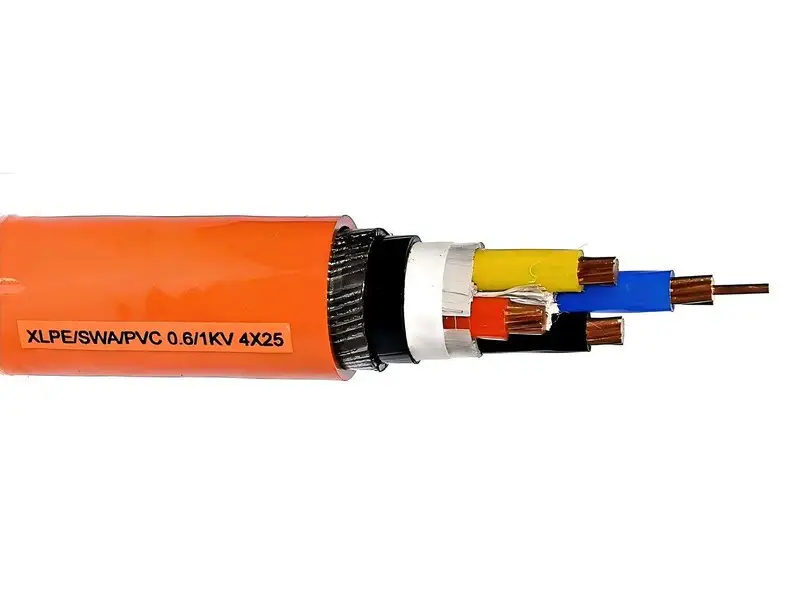
XLPE/SWA/PVC cable combines XLPE insulation, steel wire armour and a PVC outer sheath for fixed power distribution. The construction can use copper or aluminium conductors, with insulation and electrical screens selected for the rated voltage.
We would favour this construction where a fixed industrial or underground route needs integral mechanical protection. The practical balance is protection versus added diameter, mass and termination space; conductor size alone tells only part of that story. XWA Power & Cable is a cable manufacturer in China. Our factory and production information introduces the manufacturing side behind these cable configurations.
XLPE/SWA/PVC for Your Project
Send the voltage, conductor material, core size and required length, or attach your existing cable schedule.
XLPE Insulation, Steel Wire Armour and PVC Sheath
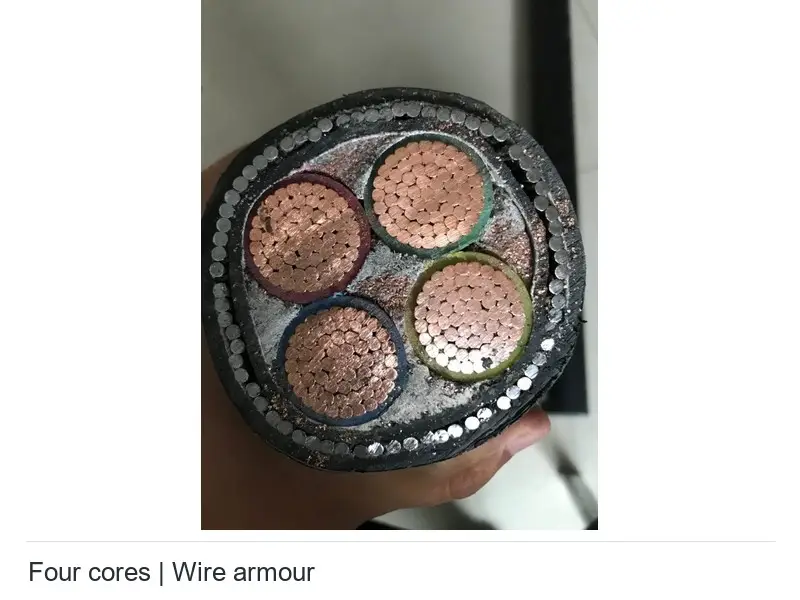
In CU/XLPE/PVC/SWA/PVC, the layers run from copper conductor through XLPE insulation, PVC bedding and steel wire armour to the PVC outer sheath. Fillers support the assembled cores, while screened MV designs add the required electrical layers.
| Component | Function in the cable | Specification that changes the design |
|---|---|---|
| Copper or aluminium conductor | Carries load current | Material, area, conductor class and core arrangement |
| XLPE insulation | Provides electrical insulation around each phase conductor | Rated voltage and declared insulation thickness |
| Electrical screens, where required | Control the electric field and provide the specified metallic-screen function | Semiconductive layers, screen material, area and fault duty |
| Bedding or inner sheath | Separates the laid-up cores and armour | Material, thickness and compatibility with the assembly |
| Steel wire armour | Adds a layer of mechanical protection | Wire diameter, coverage, corrosion protection and termination arrangement |
| PVC outer sheath | Covers the armoured assembly | Compound, thickness and declared environmental or fire performance |
What Changes Between Voltage Classes
Steel wire armour provides mechanical protection across different voltage classes. The insulation and screening system is designed for the rated voltage.
| Construction group | Representative configuration | Project role |
|---|---|---|
| Low-voltage power | Multicore CU or AL / XLPE / bedding / SWA / PVC; 0.6/1 kV is one common example | Fixed plant feeders, distribution circuits and protected outdoor routes |
| Medium-voltage distribution | Three screened XLPE cores, metallic screens, inner sheath, SWA and PVC; examples include 6/10 and 12/20 kV designs | Industrial intake, transformer feeders and distribution networks |
| High-voltage and special armoured systems | Full project-specific electrical, metallic-sheath, armour and outer-protection design | Transmission and special-service routes requiring a separate cable-system review |
In screened MV cable, semiconductive layers control the electric field and the metallic screen performs its specified electrical duty. These sit inside the bedding, armour and outer sheath.
High-voltage armoured systems require a dedicated insulation, screening, sheath and armour design. Specialised submarine systems also address marine installation loads, moisture protection and accessories.
Armour selection for single-core AC circuits
Steel is ferromagnetic. Applying ordinary steel wire armour around a single AC phase can introduce additional magnetic losses and heating. Single-core AC power cables commonly use non-magnetic armour such as aluminium wire armour (AWA), while SWA is common around multicore assemblies.
Conductor and armour materials are separate choices: a copper conductor can have aluminium wire armour. Special HV, DC and unusual armour arrangements are assessed for their losses, bonding and mechanical duty.
Technical Scope and Standards
| Design item | Low-voltage example | Screened medium-voltage example |
|---|---|---|
| Rated voltage U0/U | 0.6/1 kV reference construction | 6/10 or 12/20 kV reference construction; system requirements govern selection |
| Conductors | Copper or aluminium; conductor class declared on the datasheet | Copper or aluminium; conductor and metallic-screen areas specified separately |
| Insulation system | XLPE insulated cores with the declared bedding arrangement | XLPE with semiconductive screens and the declared metallic screen |
| Standard context | IEC 60502-1 where specified | IEC 60502-2 where specified |
| Final dimensional data | Core count, insulation and sheath thickness, armour wires, OD and mass | The same items plus screened-core and accessory interface dimensions |
| Current rating | Installation-specific calculation or matched datasheet conditions | Installation, screen/armour losses, bonding and thermal conditions |
The configurations shown illustrate the construction family. Final dimensions, ratings and supply scope follow the agreed XWA datasheet for the selected voltage, core arrangement and materials.
IEC 60228 addresses conductors; IEC 60502-1 and IEC 60502-2 cover their respective LV and MV power-cable ranges. IEC 60840 provides the framework for higher-voltage systems within its scope. The official publication scope describes the MV standard coverage.
Underground and Industrial Route Conditions
SWA provides integral mechanical protection for industrial feeders and suitable underground routes. Burial design includes bedding preparation, ground conditions, safe pulling and the specified minimum bending radius.
Sheath selection follows the route: standard PVC, low-smoke halogen-free compounds and materials for chemical or prolonged water exposure have different properties and test requirements.
Glands match the armour dimensions and overall cable diameter. Where armour serves as a protective conductor, fault-current capacity and electrical continuity are assessed for the complete connection. See the MV steel wire armour construction guide for details.
Find the Matching Cable Range
| Project requirement | Related XWA range | Relationship to this structure family |
|---|---|---|
| Fixed low-voltage power circuits | Low Voltage Cable | Voltage-class context; includes constructions other than SWA |
| Screened distribution feeders | Medium Voltage Cable | Screened electrical designs; armour is specified separately |
| Transmission-system requirements | High Voltage Cable | Full electrical, sheath and accessory system definition |
| An aluminium phase conductor | Aluminium Cable | Conductor-material range; aluminium conductor does not mean aluminium armour |
Explore Cable Types and Models for related voltage classes, named cable models and conductor families.
Project Lengths and Factory Support
XWA supports power cable manufacturing to customer drawings and cable schedules. The agreed construction defines the electrical specification, while quantities and drum lengths set the delivery arrangement.
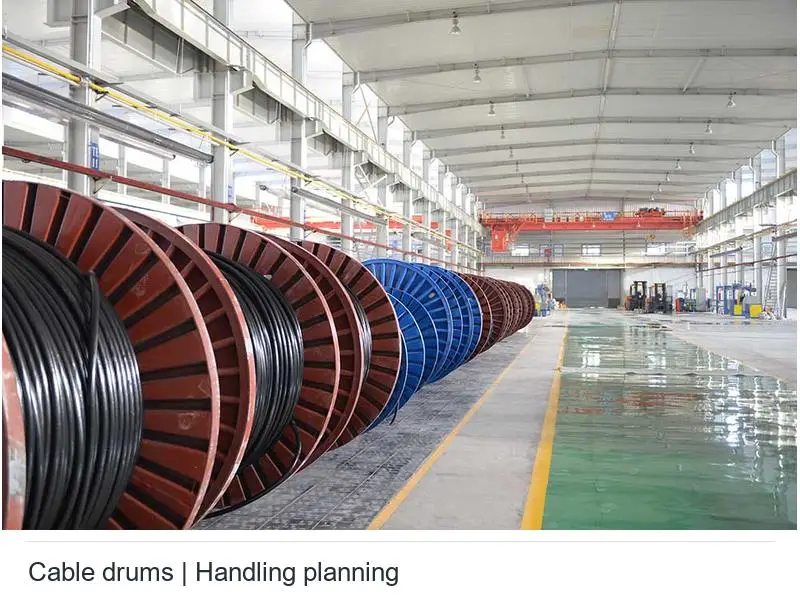
For the proposed design, the technical submission should identify the cable drawing, dimensional data, agreed tests and drum information. Outside diameter and finished cable mass affect drum selection, lifting and pulling equipment. Drum tare is additional to cable mass; the agreed minimum bending diameter must also fit the drum barrel.
To discuss a project with XWA, use the existing enquiry form or contact info@xwacable.com / WhatsApp. Manufacturing scope, inspection documents and delivery arrangements are confirmed against the requested construction.
XLPE/SWA/PVC Cable Questions
What does XLPE/SWA/PVC mean?
XLPE identifies the insulation, SWA the steel wire armour and PVC the outer sheath. Conductor material, core count, rated voltage and any electrical screens complete the specification.
Is XLPE/SWA/PVC cable only low voltage?
The construction is used in LV and screened MV designs. Higher-voltage armoured cables use a dedicated cable-system design, including voltage-appropriate insulation, screens and sheath arrangements.
Can a single-core AC cable use ordinary steel wire armour?
Ordinary ferromagnetic steel armour around a single AC phase can increase losses and heating. Non-magnetic armour such as AWA is commonly used; special steel arrangements require a loss and bonding assessment.
Does SWA make a cable waterproof or fire resistant?
SWA provides mechanical protection. Waterproofing, fire behaviour and continued circuit operation during fire each require the relevant materials, construction and tests.