XWA Low Voltage Cables are high-performance, IEC and international standard-compliant power transmission solutions engineered for reliable energy distribution across industrial, commercial, residential, and infrastructure applications. As a professional LV cable manufacturer, XWA offers a full range of 300/500V, 450/700V, 0.6/1kV low voltage cables with customizable conductor materials (copper, aluminium), insulation options (XLPE, PVC), and structural designs (armoured, unarmoured, single-core, multi-core) to meet diverse project requirements.
All XWA LV power cables are produced with premium raw materials and strict quality control, delivering excellent electrical conductivity, mechanical durability, corrosion resistance, and long-term operational stability—ideal for indoor, outdoor, direct burial, duct laying, and cable tray installation scenarios.

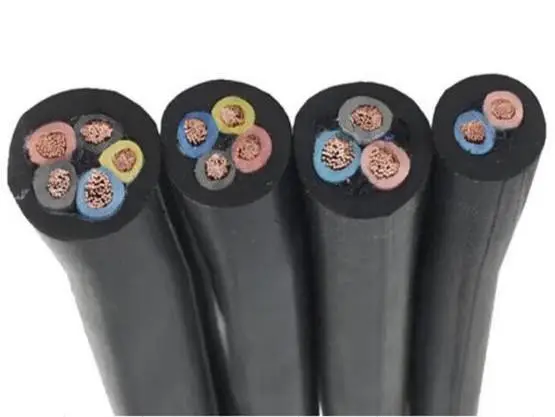
0.3/0.5 kV
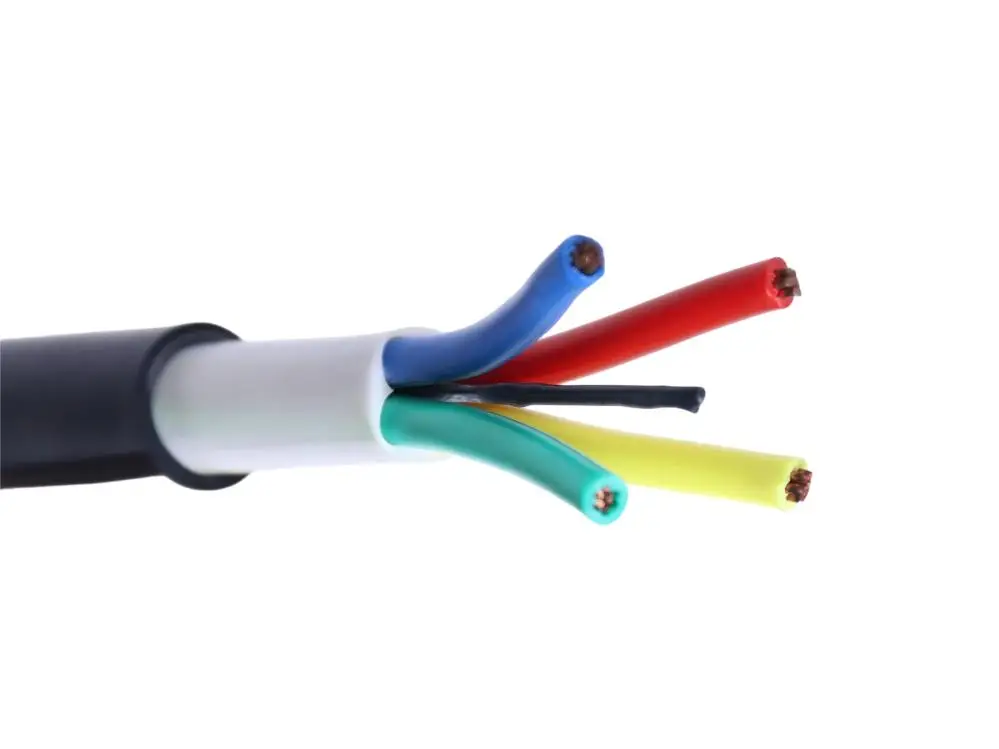
0.3/0.5 kV low voltage flexible control cable. It features a black outer sheath, an inner white insulation layer, and multiple color-coded inner cores (blue, red, green, yellow) for easy circuit identification, suitable for low-power indoor wiring and control signal transmission in residential and light industrial applications.
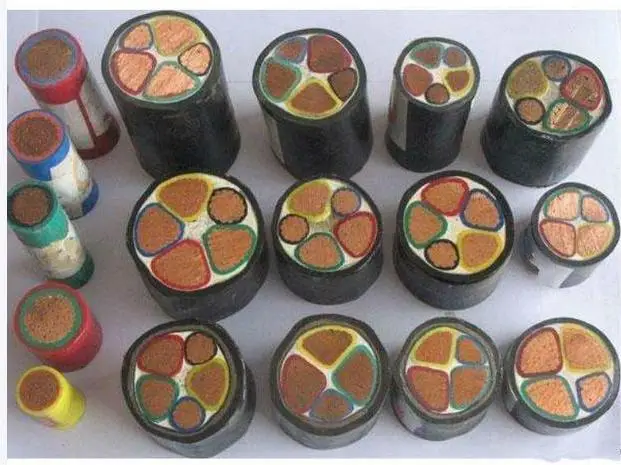
0.6/1 kV
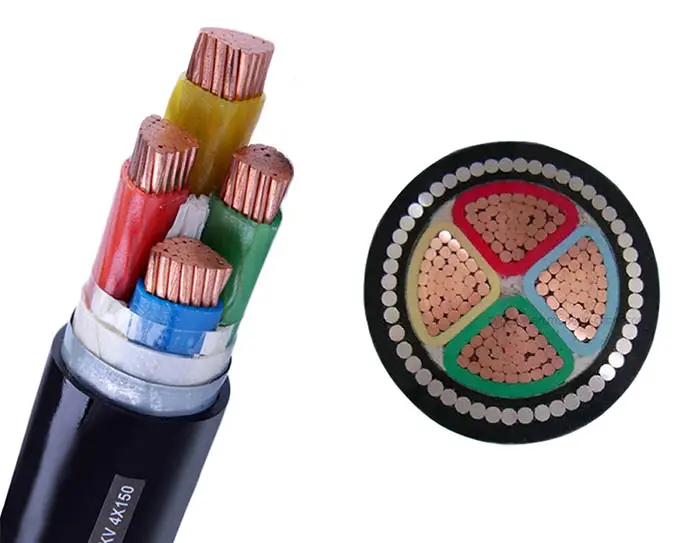
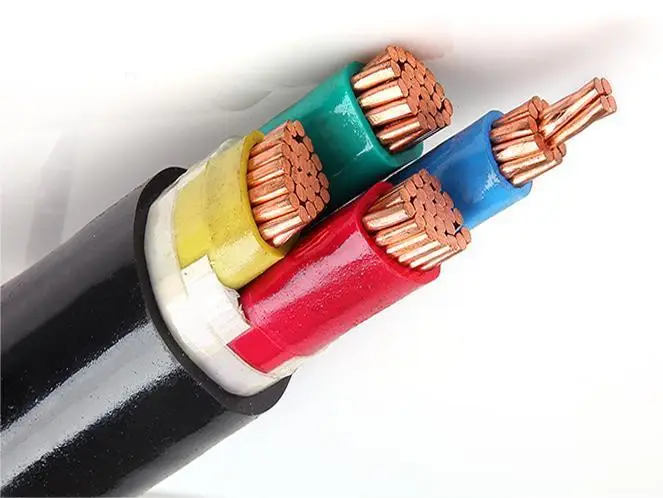
0.6/1 kV low voltage power cable, ideal for industrial and commercial power distribution. It has a tough black outer sheath, with multiple color-coded insulated cores (red, yellow, green, blue, etc.) containing stranded copper conductors for reliable electrical conductivity.
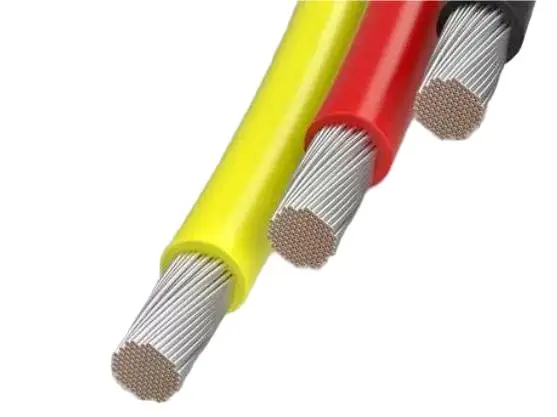
ICEA 2000V AC/DC
2000V AC/DC low voltage cable compliant with ICEA standards. It features stranded tinned copper conductors insulated in color-coded (yellow, red) thermoset jackets, designed for both alternating and direct current applications like industrial power distribution and solar systems.
IEC Standard Low Voltage Cable Models & Structure
| IEC Model Name | Core Structure | Key Features & Applications |
|---|---|---|
| IEC 60502-2 Type N2X2Y | Stranded copper/aluminum conductor → semiconductive conductor screen → XLPE insulation → semiconductive insulation screen → PVC outer sheath | The most widely used IEC LV power cable for 0.6/1kV systems, suitable for industrial, commercial and residential power distribution. Unarmoured design for flexible installation in ducts or cable trays. |
| IEC 60502-2 Type N2XY | Stranded copper/aluminum conductor → PVC insulation → PVC outer sheath | Cost-effective 0.6/1kV cable for indoor, dry environments. Lower temperature resistance (70°C) compared to XLPE alternatives, commonly used for light-duty power distribution. |
| IEC 60227 Type H05VV-F | Fine-strand copper conductor → PVC insulation → PVC outer sheath | Highly flexible 0.3/0.5kV cable for portable equipment, household appliances and temporary power connections. Multi-core design with color-coded insulation for easy circuit identification. |
| IEC 60227 Type H07RN-F | Fine-strand copper conductor → EPR rubber insulation → PVC outer sheath | Heavy-duty flexible cable with 0.6/1kV rating, resistant to oil, water and abrasion. Ideal for construction sites, mining equipment and outdoor temporary power. |
| IEC 60227 Type Control Cable (e.g., H05VV-U) | Multi-strand copper conductor → PVC insulation → PVC inner filler → PVC outer sheath | Multi-core (4-19 cores) control cable for 0.6/1kV signal transmission in industrial machinery, building automation and process control systems. Color-coded cores for precise circuit management. |
Low Voltage Cable Application Classification

Power Distribution Cables
Primary Use:Transmit low-voltage electrical power from distribution transformers to industrial, commercial, and residential buildings.
- Indoor/outdoor trunk lines in factories, shopping malls, and residential communities
- Underground direct burial or duct installation for urban power grids
Common IEC Models: N2X2Y, N2X2Y22; ICEA Models: RHW-2, USE-2
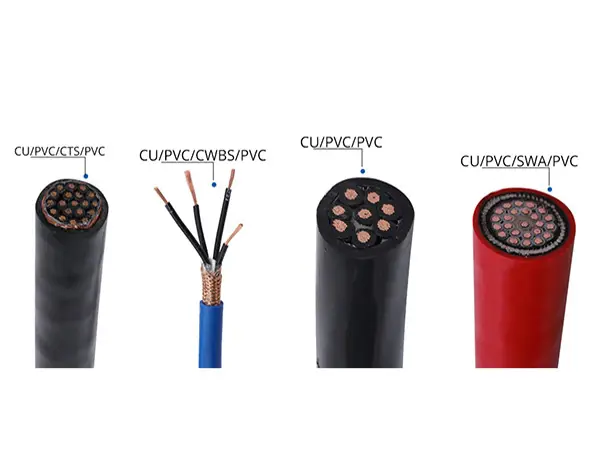
Control & Instrumentation Cables
Primary Use: Transmit control signals, data, and feedback between industrial equipment, PLC systems, and sensors.
Automated production lines, chemical plants, and water treatment facilities
Building management systems (BMS) for HVAC and lighting control
Common IEC Models: H05VV-U, H07VV-U; ICEA Models: TC-ER, PLTC

Building Wiring Cables
Primary Use:Internal wiring for lighting, power outlets, and small appliances in residential, commercial, and public buildings.
Wall and ceiling concealed wiring, cable tray installations
Temporary power for construction sites and event venues
Common IEC Models: H05VV-F, H07V-U; ICEA Models: THHN/THWN-2, XHHW-2
Flexible & Portable Cables
Primary Use:Power supply for movable equipment and temporary connections requiring frequent bending.
Power tools, stage lighting, and portable generators
Robotics, crane systems, and material handling equipment
Common IEC Models:H07RN-F, H05RR-F; ICEA Models: SOOW, SJOW
Specialized Industrial Cables
Primary Use:Designed for harsh environments with specific mechanical or chemical resistance.
Mining Cables:Flame-retardant, impact-resistant cables for underground mining equipment
Marine Cables: Waterproof, saltwater-resistant cables for shipboard power and control systems
Solar PV Cables:UV-resistant, 2000V DC cables for photovoltaic panel connections
Common IEC Models:H07RN-F (mining), H07BN4-F (marine); ICEA Models: PV Wire (UL 4703), RHW-2 (industrial)
Frequently Asked Questions of XWA Low Voltage Cable (LV)
What voltage range do XWA LV low voltage cables cover, and what core insulation materials are available?
XWA LV low voltage cables are designed for the 0.6/1kV voltage class, fully complying with international standards. The core insulation materials include cross-linked polyethylene (XLPE) and polyvinyl chloride (PVC). XLPE offers superior electrical performance and heat resistance, while PVC provides cost-effective options for indoor fixed laying scenarios.
What are the key application areas of XWA LV cables, and how do they perform in different environments?
XWA LV cables are widely used in residential buildings, commercial complexes, industrial workshops, and construction sites. They feature excellent flame retardancy and mechanical durability, with anti-aging and oil-resistant options available for harsh environments such as oil depots and chemical plants. The cables also have good bending performance, making them suitable for both fixed and mobile laying applications.
Does XWA LV cable have anti-interference performance, and what shielding options are available?
XWA LV cables are available in both shielded and unshielded versions. Shielded cables adopt copper braid or aluminum-magnesium alloy shielding, which effectively reduces electromagnetic interference (EMI) and radio frequency interference (RFI), ensuring stable signal transmission in high-interference environments such as data centers and control rooms.
What are the minimum bending radius requirements for XWA LV cables during installation?
XWA LV cables follow IEC 60228 standards for installation. The minimum bending radius is 10 times the outer diameter for fixed installation, and 6 times the outer diameter for mobile laying (frequent movement). This ensures that the cables can be installed without damage to the insulation layer or core wires.
What are the core advantages of XWA LV cables compared to other brands in the market?
- Cost-effectiveness: High-performance materials at competitive prices, suitable for mass applications.
- Safety: Passes strict fire resistance and flame retardancy tests, with low smoke and no halogen (LSNH) options available for special fire safety requirements.
- Durability: The outer sheath is made of high-quality PVC or PE, which is resistant to UV radiation, moisture, and chemical corrosion, ensuring long-term reliable operation.
