
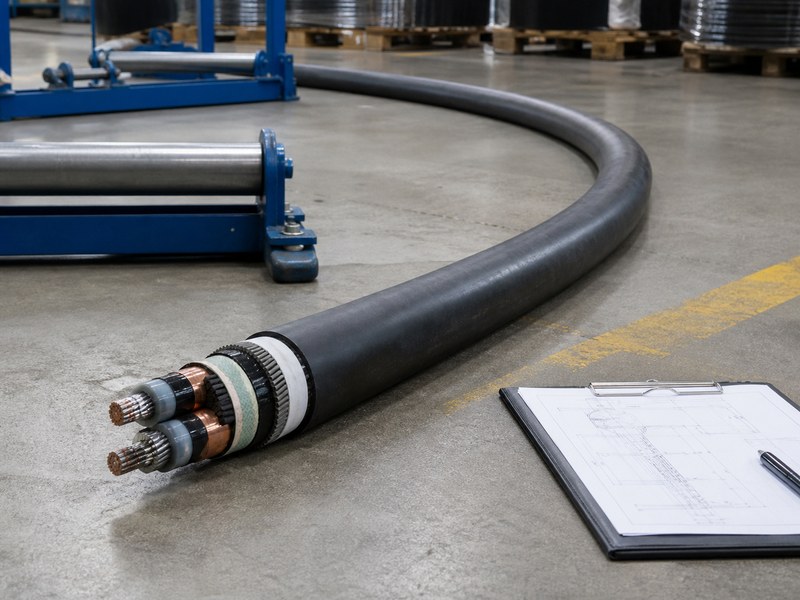
MV cable bending radius and pulling tension must be checked before an underground route is installed. Bend control protects the XLPE insulation, stínění vodiče, izolační clona, kovová obrazovka, brnění, and outer sheath from mechanical damage. Pulling tension limits the force applied during duct, příkop, or tunnel installation. The correct limits are not universal values; they must come from the cable datasheet, specifikace projektu, installation method statement, and the cable manufacturer’s handling instructions.
Installation limits are engineering controls, not site preferences
Medium voltage cable is built as an electrical insulation system and a mechanical structure. During service, it carries current and withstands electrical stress. Během instalace, it faces a different risk: ohýbání, tahání, dragging, twisting, manipulace s bubnem, and pressure at route bends. A cable can pass factory electrical tests and still be damaged if the route is pulled with excessive force or bent below the allowed radius.
XWA treats bending radius and pulling tension as part of the cable release review for underground MV routes. The review connects cable construction with route reality: materiál vodiče, jednojádrové nebo tříjádrové provedení, typ zbroje, materiál pláště, délka bubnu, duct route, bend count, roller spacing, a instalační zařízení. The cable page for MV napájecí kabel gives the product context, while voltage-specific designs such as 33kV kabel require closer attention because larger diameter normally increases handling stress.

What bending radius protects inside an MV cable
Bending radius is the minimum curve a cable may follow without overstressing its layers. In an MV cable, the concern is not only the black outer sheath. Dirigent, stínění vodiče, XLPE izolace, izolační clona, kovová obrazovka, lůžkoviny, brnění, and oversheath must bend together without separation, cracking, ovalization, or local compression.
Excessive bending can create hidden defects. The outer sheath may look acceptable while the insulation screen, měděná páska, stínění z měděného drátu, or armor has been stressed. In service, these defects can become partial discharge points, sheath failures, moisture paths, or local overheating risks. This is why minimum bending radius is normally stricter for larger diameter cables, armored cables, and higher voltage classes.
| Vrstva nebo komponenta | Why bending control matters | Visible sign may be absent |
|---|---|---|
| Dirigent | Strands can be compressed or displaced by tight bending. | Often hidden below screens and insulation. |
| XLPE izolace | Local deformation changes the electric stress distribution. | Usually not visible after installation. |
| Kovová obrazovka | Copper tape or wire screen can loosen, wrinkle, or shift. | May not show on the sheath surface. |
| Brnění | Steel wire or tape armor can open gaps or press into bedding. | Damage may appear only at cable preparation. |
| Vnější plášť | Sharp bending can crack, flatten, or abrade the protective layer. | Surface marks may be minor but still relevant. |
Pulling tension and sidewall pressure need route data
Pulling tension is the force needed to move the cable through the route. It increases with cable weight, délka trasy, tření, stav potrubí, počet ohybů, vertical changes, and pulling method. Sidewall pressure is the force created where the cable is pulled around a bend. In many underground installations, sidewall pressure at bends is the hidden limit, even when the straight-pull tension looks acceptable.
Engineering manuals and installation guides, including resources on cable laying methods, commonly emphasize route preparation, rollers, manipulace s bubnem, bend control, and mechanical stress. XWA applies the same principle from the manufacturing side: the cable design and route method must be reviewed together before drum length and packing are finalized.
| Installation factor | Effect on pulling risk | Tovární kontrolní bod |
|---|---|---|
| Long straight route | Higher accumulated friction and pulling load. | Confirm drum length, hmotnost kabelu, and pulling method. |
| Multiple bends | Higher sidewall pressure and sheath abrasion risk. | Review bend radius, roller placement, and route sequence. |
| Duct installation | Friction depends on duct condition, vyplnit, lubrikant, and alignment. | Confirm outside diameter, velikost potrubí, and installation plan. |
| Armored cable | Higher weight and larger diameter can increase handling stress. | Review armor type, bending limit, and drum dimensions. |
| Single-core cable | May require phase-by-phase handling and bonding coordination. | Confirm cable layout, design obrazovky, and pulling sequence. |
Underground environments change the practical installation margin
A direct-burial trench, potrubní banka, tunel, tray transition, and substation entry do not create the same mechanical conditions. A trench may allow a broader route curve, but it can introduce stone contact, sheath abrasion, and uneven bedding. A duct route can protect the cable after installation, but the pulling stage may be more demanding because friction and bends are concentrated inside a fixed path.
The route should be checked before shipment when cable length is long, voltage class is high, armor is heavy, or a route has tight bends. Drum length is also part of the installation plan. A very long drum can reduce joints, but it also increases drum weight and handling difficulty. A shorter drum may be easier to move, but it adds joint planning and test coordination. The correct answer depends on the route and site equipment, not only on cable production capacity.
Common causes of installation damage
Most underground MV cable handling problems are avoidable. The common pattern is that a route looks simple on the layout drawing, but the installation method does not match the actual cable diameter, hmotnost bubnu, or bend geometry. Damage may happen at duct entries, trench corners, drum payout points, sharp rollers, poorly aligned pulling heads, or transitions from outdoor route to switchgear room.
- Tight bends near duct mouths or switchgear entries.
- Insufficient rollers, causing the sheath to scrape against concrete or soil.
- Pulling from the wrong direction, increasing bend pressure.
- Uncontrolled drum braking, allowing cable loops or twist.
- Route changes made after drum length has already been fixed.
- Accessory space ignored until cable termination starts.
How XWA reviews MV cable handling data before shipment
From a factory engineering perspective, installation review starts with information that affects both manufacturing and delivery. XWA checks the cable construction, estimated outside diameter, délka bubnu, způsob balení, armor and sheath design, marking requirements, a uvolnit dokumenty. For underground routes, the route method is also reviewed when available: potrubní banka, příkop, tunel, přímý pohřeb, směr tažení, and expected bend points.
This review does not replace the installer method statement or local safety procedure. It helps keep the supplied cable aligned with the route. Například, a three-core armored MV cable may require different drum planning from three single-core cables. A copper wire screen design may change termination preparation compared with copper tape screen. The article on Typy stínění VN kabelů explains why the screen construction must be known before accessory and installation details are finalized.
Data that should be confirmed before route installation
| Datová položka | Proč na tom záleží | Responsible document |
|---|---|---|
| Vnější průměr kabelu | Controls bending radius, výplň potrubí, roller size, and gland selection. | Factory datasheet and approved drawing. |
| Hmotnost kabelu | Affects pulling load, manipulace s bubnem, zdvihání, and route support. | Datový list, seznam balení, drum drawing. |
| Minimum bending radius | Defines route bends, drum payout, and entry transitions. | Manufacturer handling instruction or project standard. |
| Pulling method | Determines whether force is applied to conductor, tahání oka, stocking, nebo pochva. | Installation method statement. |
| Route bend count | Determines sidewall pressure and pulling direction risk. | Route drawing and site survey. |
| Typ příslušenství | Needs matching diameter, obrazovka, brnění, a napěťovou třídu. | Accessory datasheet and cable drawing. |
The practical rule for MV underground routes
The safest specification approach is to make installation limits visible before the cable leaves the factory. Minimum bending radius, tahání napětí, boční tlak, duct route, délka bubnu, and accessory space should be checked together. If one item changes, the others may need review. A route change can affect drum length. A voltage-class change can affect outside diameter. An armor change can affect weight, poloměr ohybu, and pulling force.
Pro XWA, the central conclusion is straightforward: an MV cable is not ready for underground installation because the voltage, velikost vodiče, and standard are named. It is ready when the approved cable construction and the actual route method can work together without excessive mechanical stress.
FAQ
Is there one universal minimum bending radius for all MV cables?
Žádný. The minimum bending radius depends on cable diameter, třída napětí, jádrový počet, brnění, pochva, design obrazovky, and the manufacturer’s handling instruction. The project standard may also define additional limits.
Why does sidewall pressure matter during cable pulling?
Sidewall pressure concentrates mechanical force where a cable is pulled around a bend. It can damage the sheath, brnění, obrazovka, or insulation system even when straight-route pulling tension appears acceptable.
Does armored MV cable need more installation space?
Usually yes. Armor increases diameter and weight, and it can increase bending and handling requirements. The actual space requirement depends on the cable design and the route geometry.
Should pulling limits come from the standard or from the cable factory?
Both sources matter. The project standard and method statement set the required installation framework, while the cable factory provides product-specific dimensions, hmotnost, bending guidance, and handling information.
What is the most useful route information before cable drum planning?
Délka trasy, bend locations, velikost potrubí, způsob instalace, směr tažení, ukončovací prostor, lifting limits, and required delivery length are the most useful details before drum length and packing are finalized.