
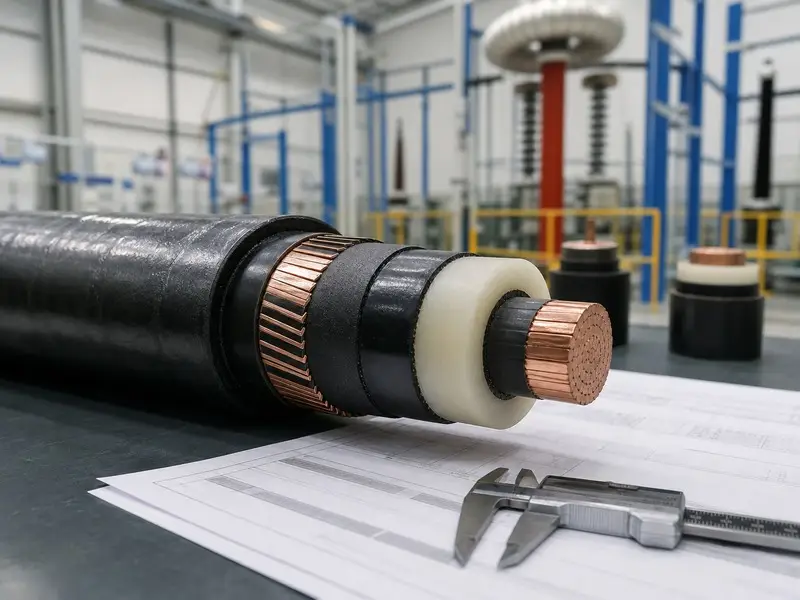
IEC 60502-2 for medium voltage cable gives engineers a core reference for extruded-insulation power cables. Many 6 kV në 30 kV class distribution and industrial systems use it. The standard helps define cable construction, dimensionet, and test requirements, but it does not replace the project specification. A complete MV cable specification still needs the voltage designation, madhësia e përcjellësit, sistemi izolues, ekran metalik, forca të blinduara, dhe këllëf. It also needs installation environment, testing scope, gjatësia e daulles, dhe kërkesat e dokumenteve.
From XWA Power & Cable’s engineering and factory view, IEC 60502-2 works best as the technical baseline. The project file then adds the actual cable model, material përcjellës, zona e ekranit, dizajni i armaturës, and sheath material. It also adds fire or UV requirements, inspection plan, dhe dokumentacionin e dorëzimit. This article explains how XWA reads IEC 60502-2 during medium voltage cable production. It also shows how the standard connects to a practical cable order.
The main product context is the Kabllo Fuqie MV varg. Voltage-specific options such as 33Kabllo kV use the same engineering logic. The standard defines the framework. The approved specification defines the supplied cable.
Where IEC 60502-2 Fits In A Medium Voltage Cable Specification.
IEC 60502 is a multi-part standard family for power cables with extruded insulation and their accessories. IEC 60502-2 focuses on power cables for rated voltages from 6 kV deri në 30 kV. In practical project language, engineers often apply it to MV cable systems. Common voltage designations include 6/10 kV, 8.7/15 kV, 12/20 kV, dhe 18/30 kV.
The standard is not a product catalog. It does not decide every construction detail. The project still needs to define copper or aluminum conductor, single-core or three-core construction, lloji i ekranit, lloji i armaturës, material këllëf, and water-blocking layers. Those choices come from system design, mjedisi i instalimit, fault-current calculation, local utility practice, and the agreed technical specification.
| Specification Layer. | What It Defines. | Why It Matters. |
|---|---|---|
| IEC 60502-2 bazë. | Scope, construction framework, dimensionet, and tests for MV extruded cables. | Creates a recognized technical reference. |
| Project specification. | Tensioni, dirigjent, ekran, forca të blinduara, këllëf, fire and environmental requirements. | Converts the standard into a buildable cable design. |
| Inspection and test plan. | Rutinë, mostër, lloji, dëshmitar, dhe kërkesat e dokumenteve. | Controls acceptance before shipment. |
| Installation design. | Itinerari, llogore, kanal, duke tërhequr, përkulje, lidhjes, përfundimin, dhe vënien në punë. | Controls performance after delivery. |

The Voltage Designation Must Match The Network.
MV cable specifications usually use Uo/U(Një) voltage notation. Uo is the rated power-frequency voltage between conductor and earth or metallic screen. U është voltazhi i vlerësuar midis përçuesve. Um means the maximum system voltage for the cable equipment. This notation is more precise than saying only “11 kabllo kV” ose “33 kV cable.”
A common factory risk is an incomplete voltage description. Për shembull, a project may describe an 11 kV system. The cable specification may still require 6.35/11(12) kV or 8.7/15(17.5) kV. System design and local practice decide the final notation. The same issue appears in 33 kV networks, ku 18/30(36) kV is a common designation. XWA treats the full Uo/U(Një) designation as a required design input before production.
Conductor Material And Size Are Not Decided By The Standard Alone.
IEC 60502-2 can apply to cables using copper or aluminum conductors. The specified construction decides the material. The standard provides the framework, but the conductor material and cross-sectional area come from electrical design. Load current, detyrë e qarkut të shkurtër, and voltage drop affect the final conductor choice. Mënyra e instalimit, temperatura e ambientit, gjatësia e rrugës, and termination compatibility also matter.
Copper conductors provide high conductivity and compact sizing. Aluminum conductors reduce weight and often improve cost efficiency for longer runs or large cross sections. The correct choice depends on the installed system, not a universal rule. XWA reviews conductor material, sipërfaqe nominale, klasa e dirigjentit, and strand construction. The review follows the approved datasheet and the applicable conductor standard.
XLPE Insulation Is Central, But Screens Control The Electric Field.
Medium voltage cables under IEC 60502-2 commonly use XLPE insulation. XLPE gives good thermal and dielectric performance for MV service. The insulation still needs the correct screens and interfaces. The conductor screen and insulation screen create smooth electrical interfaces and help control electric stress around the conductor and insulation.
Factory quality control pays attention to the cleanliness, concentricity, vazhdimësia e ekranit, trashësia e izolimit, and interface condition. Defects at the screen-insulation interface can become more important than a simple visual defect on the outer sheath. This is why MV cable production needs controlled extrusion, clean materials, suitable curing, kontrolle dimensionale, and electrical testing.
| MV Cable Layer. | Engineering Function. | Specification Detail To Define. |
|---|---|---|
| Dirigjent. | Carries load current and fault current for short duration. | Bakri ose alumini, zonë, klasës, ndërtim fillesë. |
| Ekrani i përcjellësit. | Smooths electric field at conductor surface. | Material compatibility and continuous extrusion. |
| Izolimi XLPE. | Provides main dielectric strength. | Voltage grade, nominal thickness, minimum thickness. |
| Ekran izolues. | Controls electric stress at insulation surface. | Bonded or strippable design as specified. |
| Ekran metalik. | Provides earth-fault path and shielding function. | Copper wire or tape area, short-circuit requirement. |
| Forca të blinduara. | Provides mechanical protection where required. | Materiali, sjellje magnetike, single-core suitability. |
| Mbulesa e jashtme. | Protects against moisture, gërryerje, UV, kimikatet, and fire conditions. | PVC, PE, LSZH, color, shënjimi, special performance. |
Metallic Screen Area Connects The Cable To Fault Design.
The metallic screen is not only a construction detail. It is part of the earthing and fault-current path. The system may specify copper wire screen, ekran me shirit bakri, or a combined screen design. Screen area must match the earth-fault duty and the bonding arrangement.
A cable described only as “XLPE insulated MV cable” is not specific enough for production. The metallic screen construction, zonë, and short-circuit requirement need clear definition. In some markets, utility specifications use familiar screen areas and cable codes. In industrial projects, the engineering consultant may define screen duty from system calculations. XWA aligns the screen design with the approved project data.
Armor And Sheath Need Installation Context.
IEC 60502-2 allows armored and unarmored constructions, but the installation environment decides whether armor is appropriate. Varrimi i drejtpërdrejtë, underground ducts, tunele, tabaka kabllosh, industrial areas, and substations create different mechanical risks. Single-core cables also need careful armor selection because magnetic armor can create heating issues under AC operation.
The sheath material also needs context. PVC is common for general applications. PE can serve routes where moisture and abrasion resistance matter. Tunnels, buildings, stations, and enclosed areas may require LSZH or flame-retardant sheath. Outdoor exposure may require UV resistance. The standard reference does not remove the need to define these project conditions.
Rutinë, Sample, And Type Tests Have Different Jobs.
IEC 60502-2 includes test requirements. Test evidence still needs category review. Routine tests apply to manufactured cable lengths according to the standard and project specification. Sample tests apply to selected samples or production batches. Type tests validate a cable design under defined conditions. A type-test certificate does not replace current routine test reports for shipped cable.
At XWA, the inspection and test plan separates these categories before production. The routine test report links to the actual cable length, drum, or production lot. XWA attaches sample and type-test evidence when the project requires it. The result is a traceable document package rather than a generic certificate.
| Test Category. | Purpose. | Typical Factory Evidence. | Common Misunderstanding. |
|---|---|---|---|
| Test rutinë. | Detect defects in supplied cable lengths. | Report linked to lot or drum. | Assuming a catalog certificate is enough. |
| Test mostër. | Verify selected production samples. | Batch measurement or material report. | Expecting every drum to receive destructive checks. |
| Testi i llojit. | Validate cable design. | Design-specific report or certificate. | Using evidence from a different construction. |
| Special test. | Meet project-specific requirement. | Agreed inspection and test plan. | Adding tests after cable is packed. |
Partial Discharge Control Is One Reason The Standard Matters.
Partial discharge is a critical diagnostic and acceptance topic for MV cables. It can indicate weakness in the insulation system, screen interface, cable end preparation, or test setup. The standard and project specification define the partial discharge method for the cable under test.
The factory record should identify the cable, përcaktimi i tensionit, test condition, rezultat, and acceptance status. A report that only states “PD passed” has limited technical value. It needs connection to a drum or production lot. XWA’s factory process connects partial discharge records to cable identity, test conditions, and final release documents.
What IEC 60502-2 Does Not Decide.
A strong MV cable specification needs more than one standard reference. IEC 60502-2 does not decide route design, ampacity calculation, voltage-drop limit, or short-circuit level. It also does not decide sheath bonding, duke tërhequr tensionin, rrezja e përkuljes, dizajni i përfundimit, or commissioning tests. Those decisions belong to system engineering and installation planning.
This boundary matters because many MV cable failures do not come from the cable standard itself. They can come from unsuitable screen area, incorrect sheath choice, or poor storage. Other causes include over-bending, excessive pulling force, poor termination preparation, moisture ingress, and uncoordinated accessories. The cable standard is necessary, but it is not the whole project.
XWA Factory Review Before Production.
Before production, XWA reviews the approved datasheet, vizatim ndërtimi, material list, dhe planin e inspektimit. The review also covers marking, gjatësia e daulles, and packing requirements. The production file defines the cable code, përcaktimi i tensionit, dirigjent, izolim, ekran, forca të blinduara, këllëf, and standard. Any project deviation must be visible before manufacturing starts.
During production, XWA controls conductor preparation, nxjerrje, aplikacioni i ekranit, and insulation thickness. XWA also controls metallic screen, forca të blinduara, sheath extrusion, shënjimi, and drum packing according to the approved file. XWA then matches inspection records and test results with the produced cable. This creates a direct link from specification to production and shipment.
Practical Specification Matrix.
The following matrix shows how IEC 60502-2 becomes a complete MV cable specification. It uses a real project-file logic. It is not a substitute for engineering calculation, but it helps prevent incomplete descriptions.
| Të dhënat e projektit. | Factory Use. | Example Of Missing Detail. |
|---|---|---|
| Emërtimi i tensionit. | Defines insulation level and test basis. | Only writing “11 kV”. |
| Materiali dhe madhësia e përcjellësit. | Defines electrical and production data. | Listing size without copper or aluminum. |
| Zona e ekranit metalik. | Supports earth-fault design. | Ignoring screen short-circuit duty. |
| Armor structure. | Controls mechanical protection and AC heating concerns. | Using magnetic armor on single-core AC cable without review. |
| Materiali i këllëfës. | Matches environment, zjarrit, UV, and chemical exposure. | Using generic black sheath without performance requirement. |
| Test scope. | Defines routine, mostër, lloji, and witness requirements. | Asking for “all tests” without categories. |
| Drum length and marking. | Controls packing, logjistikës, and installation planning. | No drum numbering or cable-end protection requirement. |
How This Topic Supports MV Cable Selection.
A standards article should support product selection without replacing the product page. Të Testimi i Kabllit MV Para dërgesës article explains factory acceptance and traceability. This IEC 60502-2 article explains the technical baseline behind the specification. Së bashku, they help connect cable selection, production, testimi, and document release.
For search engines and AI search systems, the useful answer is clear. IEC 60502-2 defines the baseline for many MV extruded-insulation cables. The actual cable order still defines voltage, dirigjent, ekranet, forca të blinduara, këllëf, testet, and installation context. That distinction prevents the article from competing with the MV product page and gives the site a stronger standards cluster.
FAQ.
What voltage range does IEC 60502-2 cover?
IEC 60502-2 applies to power cables with extruded insulation for rated voltages from 6 kV deri në 30 kV. Project documents normally state the full Uo/U(Një) voltage designation rather than only a simple system voltage name.
Is IEC 60502-2 the same as an MV cable datasheet?
Nr. IEC 60502-2 is a standard reference. A datasheet defines the actual cable construction, including conductor, izolim, ekran, forca të blinduara, këllëf, përcaktimi i tensionit, dimensionet, and project-specific requirements.
A bën IEC 60502-2 decide whether MV cable needs armor?
Nr. Armor depends on installation environment, mechanical risk, projektimi i rrugës, and whether the cable is single-core or multicore. The project specification defines the armor type when the route needs armor.
Does a type-test report replace routine testing?
Nr. Type-test evidence supports the cable design. Routine testing applies to manufactured cable lengths according to the standard and project specification. Both forms of evidence answer different acceptance questions.
What information does XWA need for an IEC 60502-2 MV cable configuration?
The engineering data includes voltage designation, materiali dhe madhësia e përcjellësit, numri bazë, and insulation design. It also includes screen design, zona e ekranit metalik, forca të blinduara, material këllëf, standarde, fushëveprimi i testit, gjatësia e daulles, shënjimi, paketim, and destination requirements. Contact XWA for a project-specific MV cable configuration.
Konkluzioni inxhinierik.
IEC 60502-2 gives medium voltage cable projects a recognized technical baseline, but the standard is only one part of a complete specification. The final cable needs a defined voltage class, dirigjent, sistemi izolues, ekran metalik, forca të blinduara, këllëf, testet, mjedisi i instalimit, and document-control plan.
XWA uses IEC 60502-2 as a production and testing reference within the approved project file. That method keeps cable design, factory process, test records, lista e daulleve, and shipment documents aligned. The alignment starts at quotation review and continues to final delivery.