XWA Control Cable represents the pinnacle of signal transmission technology, engineered to deliver unmatched performance in the most demanding industrial environments.
As the critical nervous system connecting controllers, sensors, actuators, and drives, XWA Control Cable ensures that every command is transmitted with absolute precision and every signal arrives without distortion.

Control Cable Cu ATA
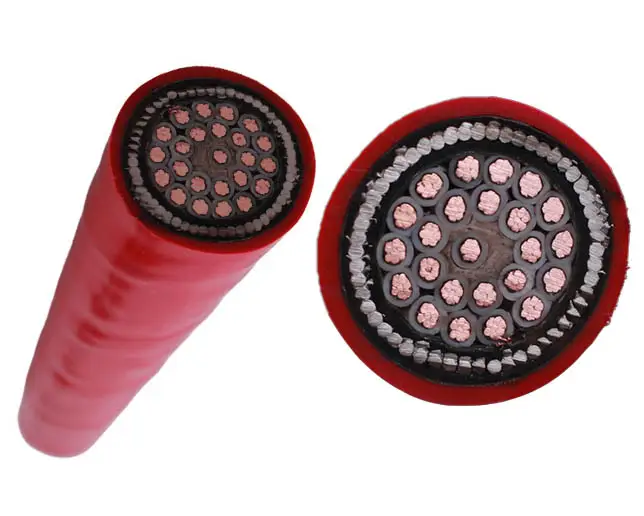
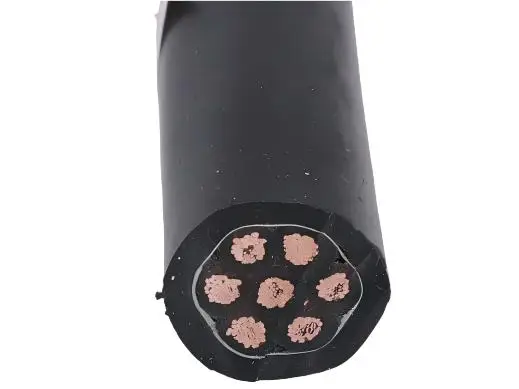
7-core control cable with aluminum tape armoring, constructed with Class 2 stranded copper conductors, each insulated in PVC. The cores are laid up together with filling and wrapped in a PVC inner sheath, then protected by an Aluminum Tape Armored (ATA) layer for mechanical resilience, and finished with a durable black PVC outer sheath. Its typical IEC-style marking is:
Cu/PVC/PVC – 7×1.5mm² – ATA – 450/750V.
Control Cable Multi-core
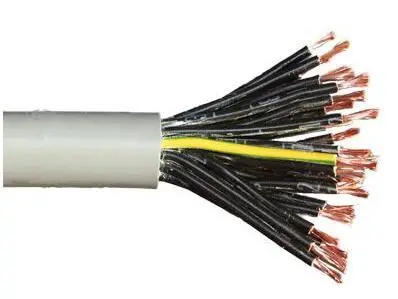
Multi-core flexible control cable, constructed with Class 2 stranded copper conductors, each insulated in black PVC with color-coded identification markers (including a distinct yellow/green core for protective grounding). The cores are laid up together with filling, wrapped in a grey PVC inner sheath, and finished with a durable PVC outer sheath for environmental protection. Its typical IEC-style marking is:
Cu/PVC/PVC – 37×1.0mm² – Unscreened – 450/750V.
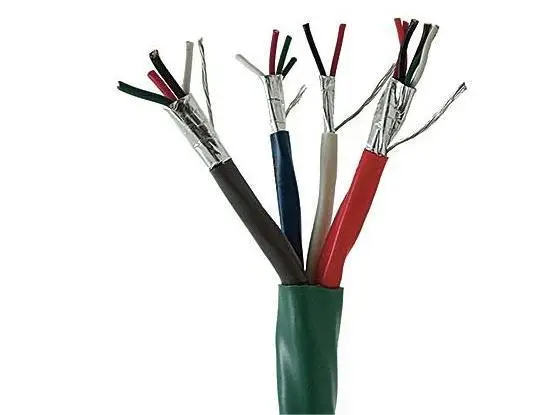
Control Cable Shielded
multi-pair shielded control cable, constructed with Class 2 stranded copper conductors. Each pair is insulated in colored PVC (black, red, etc.) and individually shielded with a tinned copper braid for enhanced EMI resistance. Its typical IEC-style marking is:
Cu/PVC/PVC – 4×2×1.0mm² – Individual Pair Braid Screen – 450/750V.
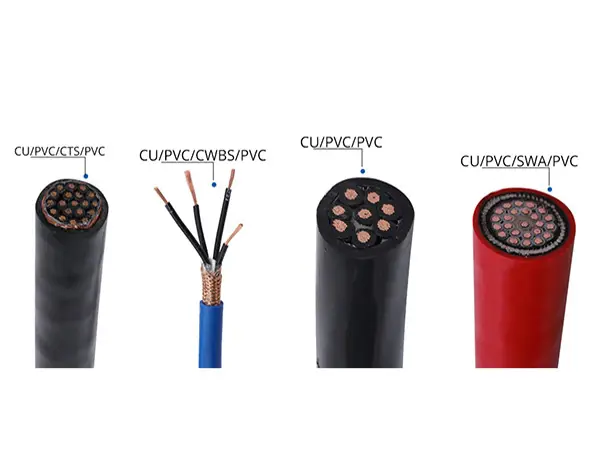
Classification of Control Cables
Classification by Structure & Protective Properties (IEC 60227 / IEC 60228)
| Classification Dimension | Typical IEC-style | Structural Description |
|---|---|---|
| Conductor | Cu/Al | Class 1 solid hard conductor, Class 2 stranded flexible conductor |
| Insulation | PVC/XLPE/EPR/LSZH | Basic insulation / temperature resistant / low smoke zero halogen |
| Shielding | Unscreened/Braid Screen/Cu Tape Screen | Anti-electromagnetic interference (EMI) |
| Sheath | PVC/PE/LSZH/STA | Mechanical protection / environmental adaptation |
| Armoring | STA/Steel Wire Armored (SWA) | Direct burial / high mechanical stress scenarios |
Classification by Fire Performance (IEC 60332 / IEC 60331 / IEC 60744)
| Performance Grade | Test Standard | Key Requirements | Typical Application Scenarios |
|---|---|---|---|
| Flame Retardant | IEC 60332-3 (Cat. A/B/C/D) | Bunched cable fire test, graded by flame spread distance | General industrial/civil fire protection |
| Fire Resistant | IEC 60331-21/23 | Maintain circuit integrity for ≥90min under 950℃ flame | Fire protection systems / emergency circuits |
| Low Smoke Zero Halogen (LSZH) | IEC 60744 / IEC 61034 | Low smoke density, no halogen gas emission during combustion | High-rise buildings / metro / tunnels / closed spaces |
Classification by Application & Communication Protocol
| Application Type | Protocol/Standard | Typical Application | Marking Example |
|---|---|---|---|
| General Control | IEC 60227 | Industrial PLC/DCS/field instrument control | Cu/PVC/PVC – n×xmm² – 450/750V |
| Fieldbus | PROFIBUS DP/CANopen/Modbus | Industrial automation serial communication | Fieldbus Cable – Cu/XLPE/PVC – Braid Screen – 450/750V |
| Instrument/Signal | HART/Foundation Fieldbus | 4-20mA analog signal / smart instrument transmission | Instrument Cable – Cu/XLPE/LSZH – Shielded – Low Capacitance |
Technical Specifications and Features
- Material Options: Available in high-conductivity annealed copper (99.97% IACS minimum) for optimal signal transmission or tinned copper for enhanced corrosion resistance in harsh environments
- Stranding Design: Utilizes fine-strand construction (Class 5 or Class 6 per IEC 60228) with strand counts ranging from 7 to 19 strands, providing exceptional flexibility for dynamic applications
- Cross-Sectional Areas: Offered in standard sizes from 0.5 mm² (20 AWG) to 6 mm² (10 AWG), with options up to 16 mm² (6 AWG) for power-intensive control applications
- Surface Treatment: Optionally available with silver or tin plating for enhanced solderability and oxidation resistance in corrosive environments
What Sets XWA Control Cable Apart
- Advanced Shielding Technology: Utilizing multiple shielding configurations including braid, foil, and composite options to provide superior EMI/RFI protection across the entire frequency spectrum
- Superior Durability: Engineered with specialized jacket materials (PVC, PUR, TPE) that offer exceptional resistance to abrasion, chemicals, oils, and temperature extremes
- Flexibility Without Compromise: Designed with high-strand-count conductors and optimized geometry to maintain signal integrity even under continuous flexing and torsion
- Comprehensive Testing: Each cable undergoes rigorous testing protocols, with some models proven to withstand over 138 million flex cycles in laboratory conditions
- Global Compliance: Manufactured to meet international standards including IEC, UL, CSA, CE, and RoHS, ensuring suitability for global deployment
Why Choose XWA Control Cable

Technical Superiority
- Advanced Materials:Specialized polymers for environmental resistance, high-purity conductors, and innovative shielding for maximum EMI protection.
- Proven Performance: Flexible variants tested to 138+ million flex cycles, 70–90 dB shielding effectiveness, a wide temperature range (-60°C to +180°C), and a service life of up to 30 years.
- Certified Quality:Global certifications (CSA, CE, RoHS) and compliance with IEC, VDE, BS, with third-party validation.
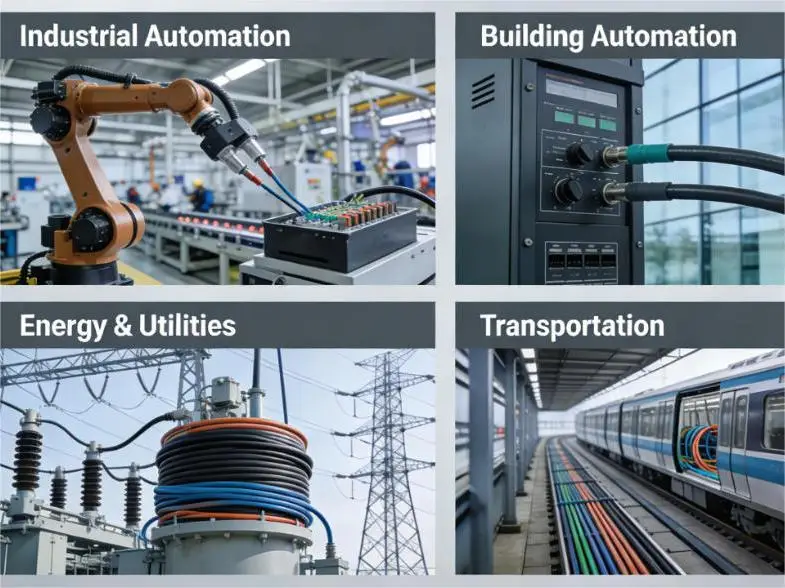
Application-Specific Solutions
- Industrial Automation: Shielded cables for PLC/VFD/sensor use, flexible variants for robotics, and field-proven performance in global manufacturing.
- Building Automation:LSZH options for enclosed spaces, integration with smart systems, and compliance with safety codes.
- Energy & Utilities:Fire-resistant and temperature-resistant cables for critical infrastructure, plus armored and nuclear-grade variants.
- Transportation: Marine/railway-certified cables, vibration-resistant designs, and lightweight options for aerospace.
FAQ for XWA Brand Control Cables
What is the rated voltage of XWA control cables and what temperature range can they work in?
All XWA control cables are designed with a standard rated voltage of 450/750V, suitable for most industrial control scenarios. The working temperature range is -40°C to +90°C for fixed installation and -5°C to +70°C for mobile laying, with excellent adaptability to different environmental temperatures.
Does XWA control cable have anti-interference performance, and what shielding types are available?
XWA control cables are available in shielded and unshielded versions to meet different application needs. Shielded types adopt tinned copper braid or copper-plastic tape shielding, which provides high EMC interference immunity and effectively reduces the impact of electromagnetic and radio frequency interference on signal transmission.
What are the key selection factors for XWA control cables in different industrial environments?
- For harsh environments with oil, moisture and mechanical wear: Choose armored and oil-resistant sheathed XWA control cables.
- For high-interference industrial automation sites: Select shielded XWA control cables (copper braid/copper tape shielding).
- For general indoor fixed laying: Unshielded flexible XWA control cables are the cost-effective choice.
What are the minimum bending radius requirements for XWA control cables during installation?
XWA control cables follow international industrial installation standards: the minimum bending radius for fixed installation is 12 times the cable outer diameter, and for mobile laying (frequent movement) is 7.5 times the cable outer diameter. Complying with this requirement can avoid damage to the cable insulation and core.
What are the main application fields of XWA control cables and their core advantages?
XWA control cables are widely used in machine and plant construction, industrial automation, power stations, building management systems and mechanical equipment control loops. Their core advantages include stable low-voltage signal transmission, flame retardant performance meeting IEC standards, durable insulation and sheathing materials, and full compliance with international and industrial cable specifications for safe and reliable long-term operation.
