Choosing the right electrical cable is critical for safety, efficiency, and compliance in demanding industrial settings. Among the most common queries is the comparison between THHN vs THWN-2 cables. While they look similar, key differences in their construction and ratings determine where each should be used. This guide breaks down the specifications, applications, and critical factors to help you decide which cable is superior for wet or damp locations.
Understanding the Basics: What Do THHN and THWN-2 Mean?
Before diving into the THHN vs THWN-2 debate, it’s essential to decode what these acronyms stand for, as defined by the National Electrical Code (NEC).
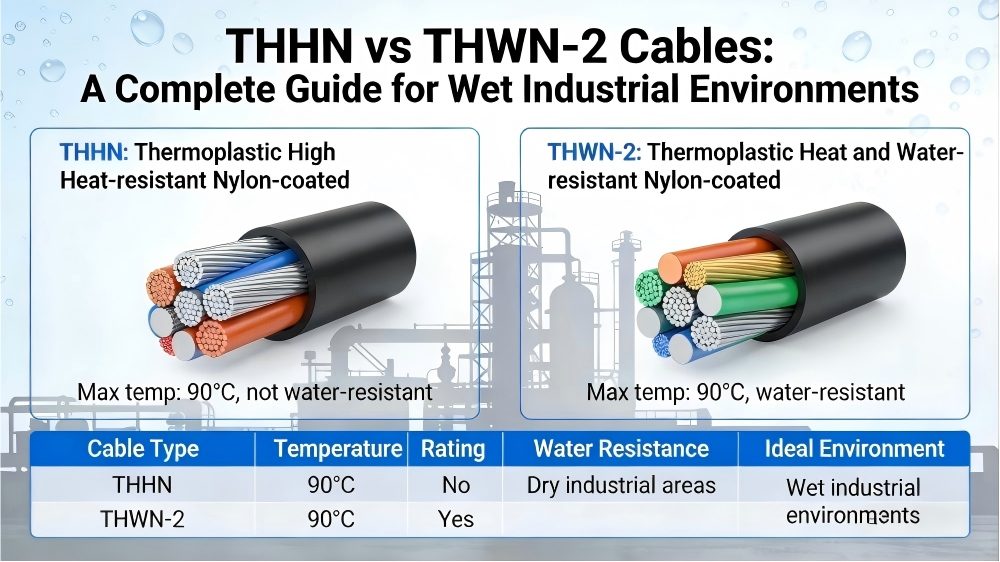
- THHN: Thermoplastic High Heat-resistant Nylon-coated. This indicates the cable has a thermoplastic insulation that is resistant to high temperatures and is coated with a nylon jacket for additional protection against abrasion and moisture.
- THWN-2: Thermoplastic Heat and Water-resistant Nylon-coated (rated for 90°C in both wet and dry locations). The “-2” is crucial, signifying a dual rating. This cable’s insulation is formulated to withstand both heat and water immersion.
The core difference lies in the insulation compound’s ability to resist moisture. While THHN has a nylon jacket that provides some moisture resistance, its primary insulation material is not rated for prolonged exposure to water. THWN-2 cable, 600V low voltage cable, however, is specifically engineered for this challenge.
Key Differences: THHN vs THWN-2 in Detail
Here’s a direct comparison of the two cable types across several vital parameters.
| Feature | THHN Cable | THWN-2 Cable |
|---|---|---|
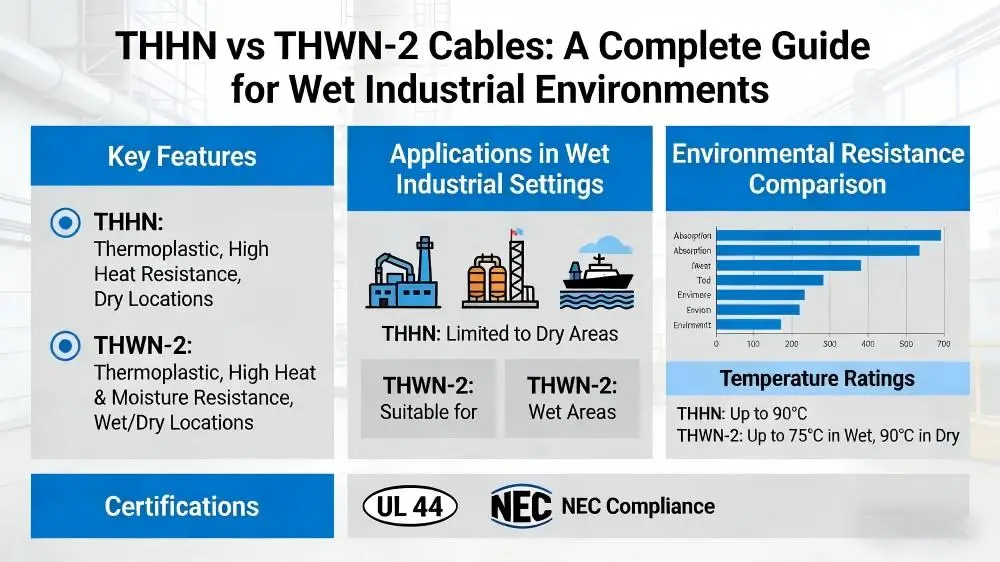
| Primary Rating | Dry and damp locations. | Dry, damp, and wet locations. |
| 温度定格 | Up to 90°C in dry locations, 75°C in damp locations. | Up to 90°C in both dry and wet locations. |
| Moisture Resistance | Good; nylon jacket resists light moisture and abrasion. | Excellent; insulation compound is oil-resistant and suitable for direct burial or water immersion when used with a proper conduit. |
| Oil & Chemical Resistance | Moderate. | Superior; specifically formulated for better resistance. |
| Common Applications | Control wiring, machine tools, appliances, and commercial building wiring in dry interior spaces. | Industrial plants, wastewater treatment facilities, outdoor lighting, underground conduits, and any environment exposed to weather, liquids, or high humidity. |
| NEC Code Compliance | Listed for use in dry and damp locations only (NEC Article 310). | Listed for use in dry, damp, and wet locations (NEC Article 310). |
The Critical Insight: In practice, most cables sold today in the U.S. are dual-rated as THHN/THWN-2. This means a single cable carries both listings, providing maximum flexibility. It meets the THHN standard for high heat in dry conditions and the tougher THWN-2 standard for wet conditions. Always check the cable’s printing on the jacket—if it says “THHN/THWN-2,” you have the more versatile product.
Which is Better for Wet Industrial Environments? The Verdict
For wet industrial environments, the choice is clear: THWN-2 rated cable is unequivocally better and often required by code.
Industrial settings like food processing plants, chemical factories, car washes, water pumping stations, and outdoor industrial yards are prone to splashing, washdowns, condensation, and direct exposure to the elements. Using a cable rated only for dry or damp locations (like standard THHN) in these conditions poses significant risks:
- Insulation Degradation: Constant moisture can break down the insulation over time, leading to cracks and loss of dielectric strength.
- Short Circuits & Ground Faults: Compromised insulation increases the risk of current leaking to ground or between conductors.
- Safety Hazards: This can result in equipment failure, fire hazards, and electrocution risks.
- Code Violations: Using a cable outside its NEC listing is a violation that can lead to failed inspections, liability issues, and insurance complications.
Therefore, when specifying wiring for wet industrial applications, you must select cable explicitly marked as THWN-2 or the dual-rated THHN/THWN-2. This ensures long-term reliability, safety, and full compliance with the National Electrical Code.
Best Practices for Installation in Wet Locations
Simply choosing a THWN-2 cable is not enough; proper installation is key.
- Use Conduit: Even water-resistant cables benefit from the added physical and environmental protection of conduit (PVC, RMC, IMC) in harsh industrial settings.
- Seal Fittings: Use rain-tight, submersible, or sealed connectors and conduit bodies to prevent water ingress at termination points.
- Proper Support: Ensure cables are adequately supported within the conduit system to prevent stress and damage.
- Follow NEC Guidelines: Always adhere to NEC Article 300.5 for underground installations and Article 300.9 for locations with high moisture levels.
Conclusion
In the THHN vs THWN-2 discussion for industrial use, the environment dictates the choice. While THHN is a reliable, cost-effective cable for standard indoor applications, the THWN-2 specification is non-negotiable for wet, damp, or oily conditions. The widespread availability of dual-rated THHN/THWN-2 cable simplifies procurement, offering the high-temperature performance of THHN with the essential water resistance of THWN-2. Always verify the markings on your cable jacket and consult the NEC to ensure your wiring project is safe, durable, and code-compliant. Investing in the right cable from the start prevents costly failures and ensures operational continuity in challenging industrial environments.
FAQ: THHN vs THWN-2 Cables
Q1: Can I use THHN cable outdoors? A: No, standard THHN cable is not rated for wet locations. If exposed to rain or direct moisture, its insulation can degrade. For outdoor use, you must use a cable rated for wet locations, such as THWN-2 or the dual-rated THHN/THWN-2, installed within a suitable conduit.
Q2: Is THWN-2 more expensive than THHN? A: Typically, the price difference is minimal, especially since most general-purpose building wire is dual-rated as THHN/THWN-2. The versatility and compliance benefits of the THWN-2 rating far outweigh any negligible cost difference.
Q3: Can THWN-2 be used in dry locations? A: Absolutely. A THWN-2 or THHN/THWN-2 cable is perfectly suitable for dry locations. It carries the same 90°C temperature rating in dry conditions as THHN, making it an excellent and flexible all-around choice.
Q4: What does the “-2” mean in THWN-2? A: The “-2” indicates that the insulation material is rated for 90°C in both wet and dry locations, as per modern NEC standards. Older THWN ratings had lower temperature limits in wet conditions.
Q5: How do I identify if my cable is THWN-2 rated? A: Look at the printing on the cable jacket. It will clearly state the wire’s ratings. If it says “THHN/THWN-2” or just “THWN-2,” it is approved for wet locations. If it only says “THHN,” it is not.