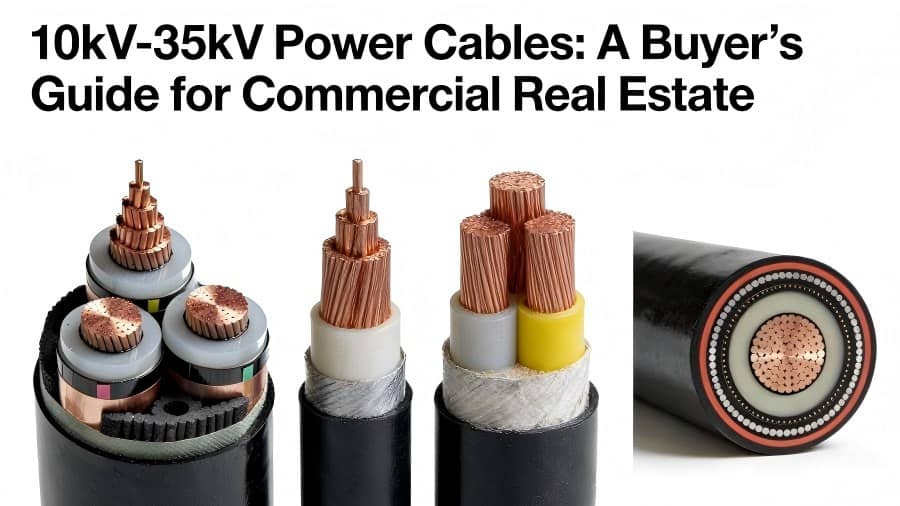
Power distribution is the backbone of any commercial property, and selecting the right high-voltage cables is crucial for safety, efficiency, and long-term reliability. For commercial real estate developers, facility managers, and electrical contractors, understanding the nuances of 10kV-35kV power cables can make a significant difference in project success. This buyer’s guide provides a comprehensive overview of key considerations, technical specifications, and best practices to help you make informed decisions.
Why High-Voltage Cables Matter in Commercial Real Estate
Commercial properties—such as office buildings, shopping malls, data centers, and industrial complexes—require robust electrical systems to support heavy loads and ensure uninterrupted operations. 10kV-35kV power cables are designed to transmit electricity over medium to long distances within a property or from the grid to the building. Choosing the wrong cable can lead to power outages, safety hazards, and increased maintenance costs.
Key Factors to Consider When Buying Power Cables
- Voltage Rating and Application
- 10kV cables are commonly used for secondary distribution in large buildings or campuses.
- 35kV cables are suited for primary distribution, often connecting substations to main switchgear.
- Ensure the cable’s voltage rating matches your system’s requirements to prevent insulation failure.
- Conductor Material and Size
- Copper conductors offer superior conductivity and durability, ideal for high-load applications.
- Aluminum conductors are lightweight and cost-effective for longer runs but require larger cross-sections.
- Calculate the correct conductor size based on load current, voltage drop, and ambient temperature.
- Insulation and Jacketing
- Cross-linked polyethylene (XLPE) insulation is the standard for 10kV-35kV power cables due to its high thermal resistance and longevity.
- Consider jacketing materials (e.g., PVC, LSZH) for environmental protection, fire safety, and compliance with local building codes.
- Installation Environment
- For underground installations, choose cables with robust moisture and corrosion resistance.
- In conduit or tray systems, ensure flexibility and adequate bending radius.
- Outdoor cables must withstand UV exposure and temperature fluctuations.
- Compliance and Certification
- Look for cables certified to international standards (e.g., اللجنة الانتخابية المستقلة, IEEE, UL) and local regulations.
- Fire-resistant and low-smoke-zero-halogen (LSZH) cables are often required for commercial spaces to enhance safety.
- Total Cost of Ownership
- While upfront costs matter, consider long-term expenses like energy losses, maintenance, and replacement.
- High-quality 10kV-35kV power cables may have a higher initial price but offer better ROI through reduced downtime and longer service life.
Installation Best Practices for Commercial Properties
Proper installation is as important as product selection. Follow these guidelines to ensure optimal performance:
- Hire experienced contractors familiar with high-voltage systems.
- Use appropriate pulling techniques to avoid insulation damage.
- Implement effective grounding and bonding to prevent electrical faults.
- Schedule regular thermographic inspections to detect hotspots early.
Common Pitfalls to Avoid
- Undersizing Cables: This leads to overheating, voltage drops, and potential fire risks.
- Ignoring Environmental Factors: Cables unsuitable for their environment degrade faster.
- Overlooking Future Expansion: Choose cables with capacity margins to accommodate growth.
- Neglecting Testing: Always conduct dielectric and continuity tests before commissioning.
Conclusion
Investing in the right 10kV-35kV power cables is a critical step in developing or upgrading commercial real estate electrical infrastructure. By prioritizing technical specifications, safety standards, and lifecycle costs, you can ensure a reliable and efficient power distribution system. Partner with reputable suppliers and certified professionals to achieve seamless integration and long-term value.
FAQ
1. What is the typical lifespan of 10kV-35kV power cables in commercial buildings? With proper installation and maintenance, high-quality XLPE-insulated cables can last 30–40 years, even under heavy load conditions.
2. Are aluminum conductors a reliable alternative to copper for 10kV-35kV cables? نعم, aluminum conductors are reliable and cost-effective for specific applications, but they require larger cross-sections to match copper’s conductivity and careful termination to prevent oxidation.
3. How do I determine the correct cable size for my commercial property? Cable sizing depends on load current, voltage drop limits, installation method, and ambient temperature. Consult IEEE or IEC standards or work with an electrical engineer for accurate calculations.
4. What safety certifications should I look for when purchasing power cables? Ensure cables meet IEC 60502, IEEE 386, or UL 1072 standards, along with local fire safety codes (e.g., LSZH for low smoke and halogen-free requirements).
5. Can existing 10kV cables be upgraded to handle 35kV loads? No, cables are designed for specific voltage ratings. Upgrading voltage requires replacing cables, insulation, and possibly switchgear to meet higher dielectric strength requirements.